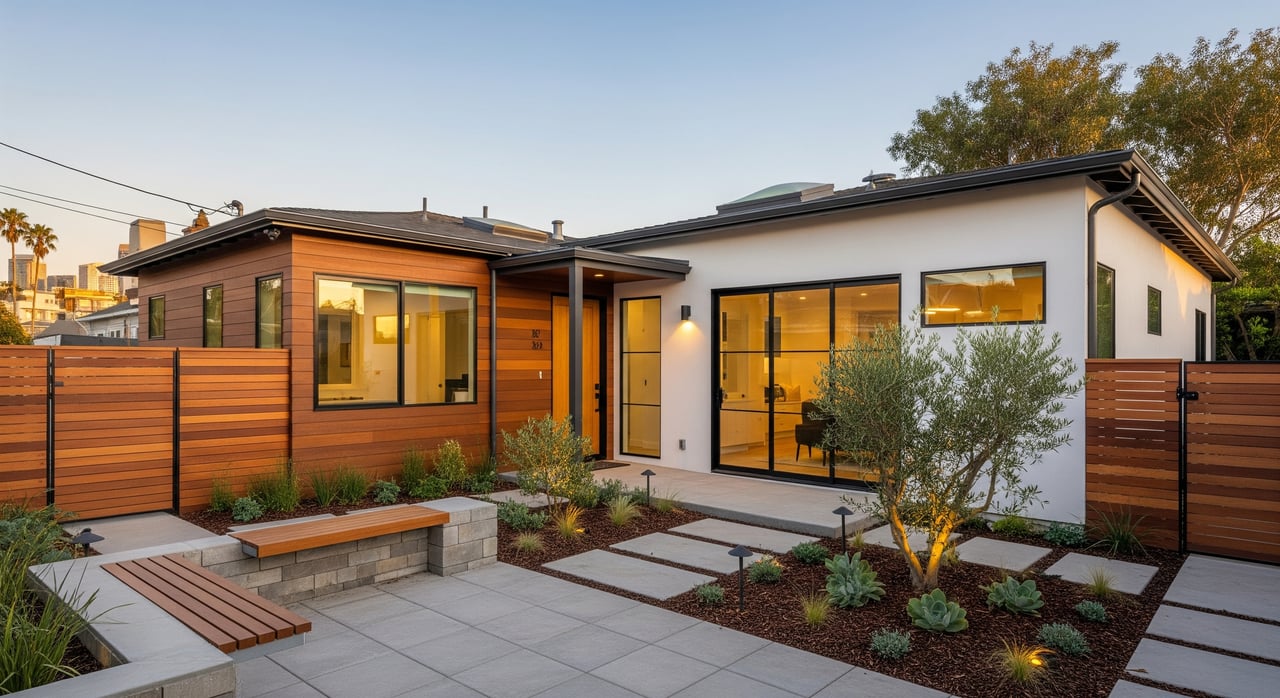
Thinking about adding an ADU to your Golden Hill property? Between California’s state rules and San Diego’s local standards, the process can feel complex, especially on older, compact lots. You want clear answers on what you can build, how long it takes, what it costs, and how renting will work. In this guide, you will learn the essentials, with Golden Hill specifics and a step-by-step plan to move forward. Let’s dive in.
What an ADU is and why it matters
An accessory dwelling unit, or ADU, is a secondary home on the same lot as your main residence. Common formats include detached new-builds, attached additions, conversions of existing space such as garages, and Junior ADUs that repurpose interior space up to roughly 500 square feet. Owners use ADUs for long-term rental income, multigenerational living, or flexible space for work and care.
California law generally requires cities to allow ADUs in most residential zones and to review applications through a ministerial process. In practice, this means a compliant ADU is reviewed against clear standards without a public hearing in typical situations.
San Diego rules that shape your ADU
Ministerial review and timelines
State law sets a ministerial path for most ADUs. A complete application is typically approved or denied within about 60 days under state timelines. Plan review can still require corrections, and overall duration varies with complexity.
Parking near transit or with conversions
Parking often becomes easier with ADUs. Under state and local rules, requirements can be reduced or waived in several cases, including when you are close to transit or converting existing space. Always confirm the current City definition of transit proximity and eligibility before finalizing your plan.
Size, setbacks, and height
San Diego applies local standards for height, setbacks, and lot coverage. Many detached ADUs can be placed closer to property lines than a primary home, within specific limits. Exact numbers depend on your zoning and parcel conditions, so verify your standards in the San Diego Municipal Code and City guidance before designing.
How many units you can add
Your zone and lot conditions control how many ADUs and JADUs are allowed. Some properties can accommodate both a standard ADU and a JADU if they meet objective standards. Check your parcel’s zoning first, then confirm allowable unit counts for your specific site.
Historic resources and design
Parts of Golden Hill include historic resources and historic districts. If your property is designated or within a district, City historic preservation staff may review your plans and may require design changes to maintain neighborhood character. This can add time and design constraints, so plan for that early.
Golden Hill site realities
Compact lots and alley access
Golden Hill often features tight lots, older garages, and alley access. These traits make garage conversions and small detached ADUs in rear yards common. Think about construction access, staging, and neighbor coordination when planning your timeline.
Utilities and connections
Water and sewer connections are critical in older neighborhoods. You may need new or upgraded connections and permits, and sometimes capacity or lateral location can be a constraint. Budget time and cost for utility design and potential connection fees.
Compatibility and materials
While many ADUs are approved ministerially, you still want a design that fits with the primary home. Matching scale, materials, and proportions can reduce friction, especially if historic review applies.
Permit process from start to finish
1) Pre-application checks
- Confirm zoning and any overlays, including historic status.
- Map setbacks, lot coverage, and likely buildable area.
- Get a preliminary utility check, including sewer and SDG&E service.
- Consider a pre-application meeting for complex or historic sites.
2) Submit a complete application
Provide a site plan, floor plans, elevations, and structural details for new construction, along with required City forms. A complete set helps you avoid resubmittals and delays.
3) Ministerial plan review
City reviewers check your plans against objective standards. Expect correction cycles that refine details on site layout, life safety, energy compliance, and utilities.
4) Building permits and inspections
Once approved, you pull building permits and schedule inspections at key stages. Construction must meet the California Building Code and local requirements, including energy and life-safety rules.
5) Final approval and occupancy
After final inspections and sign-off, your ADU is ready for move-in or long-term rental.
Typical timelines
- Plan review for compliant ADUs commonly targets about 60 days once the City has a complete application.
- Conversions of existing space often take about 3 to 6 months from planning to occupancy.
- Detached new-build ADUs commonly take about 6 to 12 months, sometimes longer if historic review or utility work is involved.
Costs and fees to expect
Construction ranges
- Interior conversion, such as a garage or attic: about $50,000 to $200,000 depending on scope, finishes, and system upgrades.
- Detached new ADU: about $150,000 to $500,000 or more based on size, site work, finishes, and utility connections.
- Junior ADU conversion: usually the lower-cost path, often under $100,000 if limited to interior work.
Older Golden Hill homes may need electrical, plumbing, or seismic upgrades. Narrow access and unique lot conditions can raise foundation or site costs. If historic review applies, design requirements can add time and cost.
Permits, impact, and connection fees
San Diego charges permit and impact fees, and state law can limit or prorate some ADU fees. Sewer and water connection charges may apply for new units. Always check the current fee schedule and utility requirements for your parcel.
Parking, rentals, and short-term rules
Parking may be reduced or waived for ADUs near transit or for certain conversions. Confirm your eligibility based on current City definitions and your site.
For rentals, ADUs are commonly used as long-term housing and must follow local landlord-tenant rules. Short-term rentals are regulated in San Diego and may require registration or be limited by location or unit type. Verify the latest City short-term rental rules before planning a short-term strategy.
Financing and property taxes
Ways to finance an ADU
- Cash-out refinance using existing equity.
- Home equity line of credit or home improvement loan.
- Construction or renovation loans tailored to ADUs.
- Private lenders or partnerships with experienced builders.
- Potential local or state incentives that can change over time. Check current City and state housing programs.
Property tax considerations
New construction can increase your assessed value for property tax purposes. Treatment can vary, and some improvements may be treated differently, so consult the San Diego County Assessor for how ADUs typically affect assessments.
HOAs, CC&Rs, insurance, and utilities
Private covenants and HOA rules can limit ADUs even when the City allows them. Recent state laws may restrict how far HOAs can go, but you should review your CC&Rs and consult counsel if you see potential conflicts.
Adding an ADU can change your insurance needs. Talk with your insurer about property and liability coverage, and consider landlord coverage if you plan to rent. Discuss metering with your utility providers, since separate or shared meters can affect cost, billing, and tenant relations.
Owner checklist for Golden Hill
- Pull your zoning and overlay information, including any historic designation.
- Measure your likely build area, setbacks, and open-space needs.
- Identify the best path: conversion, detached, attached, or a JADU.
- Complete a preliminary utility check for sewer, water, and power.
- Hold a pre-application meeting for complex or historic scenarios.
- Get multiple contractor bids and compare financing options.
- Confirm parking, rental, and short-term rules for your use case.
- Submit a complete application and plan for review cycles.
Common pitfalls and how to avoid them
- Historic review delays: start design with context-sensitive materials and proportions, and consult City historic staff early.
- Utility constraints: locate your laterals and discuss capacity and connection fees before final design.
- Nonconforming lot issues: verify setbacks, lot coverage, and access early to avoid rework.
- Incomplete submittals: hire experienced design help to prepare a clean, code-compliant plan set.
When to bring in a partner
If you want a single, operator-led partner for acquisition, development, and property management, an integrated team can streamline the process from concept to rent-ready. You can focus on your goals while one group coordinates design, permitting, construction, and long-term operations.
Ready to evaluate your Golden Hill ADU or plan your next step? Connect with the team at Folio Real Estate to align your design, build, and rental strategy.
FAQs
Can I build an ADU on my Golden Hill property?
- Usually yes if your lot is residential and there are no overriding constraints such as historic restrictions or private covenants. Verify zoning and overlays first.
How big can my San Diego ADU be?
- Size depends on your zone, setbacks, and lot coverage. State law provides broad allowances, but you should confirm exact local limits for your parcel.
Do I need parking for an ADU in Golden Hill?
- Often not. Parking can be reduced or waived for ADUs near transit or for certain conversions. Confirm eligibility with current City rules.
How long does the ADU permit take in San Diego?
- Ministerial review commonly targets about 60 days for a complete application. Total time to occupancy is often 3 to 12 months depending on scope.
What does an ADU cost to build in Golden Hill?
- Conversions often run about $50,000 to $200,000. Detached ADUs often range from about $150,000 to $500,000 or more, depending on size and site work.
Will my property taxes increase after adding an ADU?
- Likely. New construction generally increases assessed value. Confirm specifics with the San Diego County Assessor’s Office.
Can I rent my Golden Hill ADU short-term?
- Possibly, but San Diego regulates short-term rentals and may require registration or limit eligibility. Verify the latest rules before listing.
What if my HOA’s CC&Rs restrict ADUs?
- Some restrictions may be limited by state law, but private covenants can still matter. Review your documents and seek legal guidance if needed.