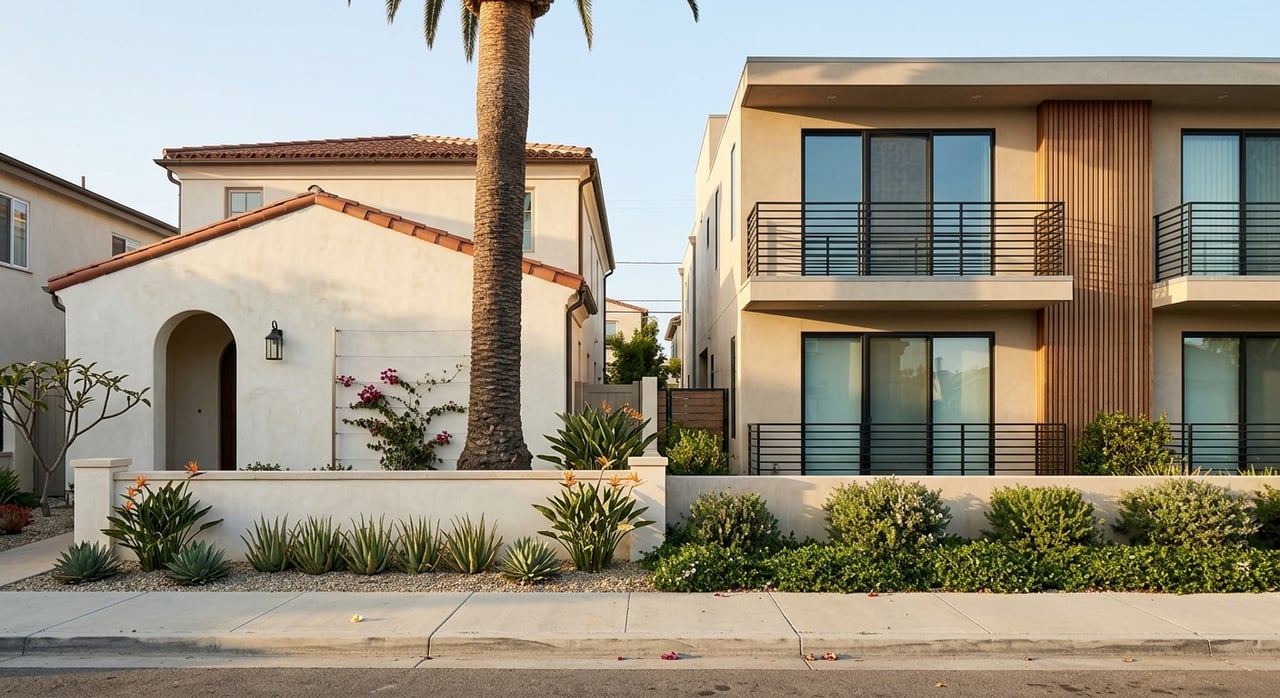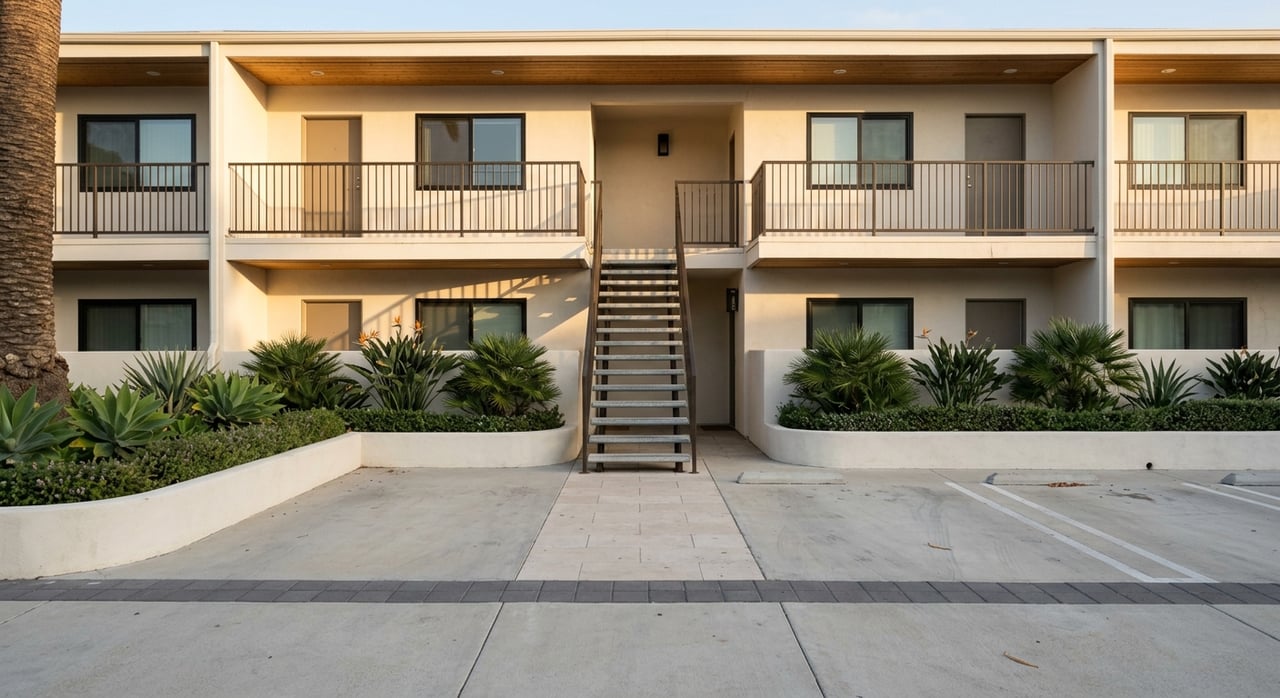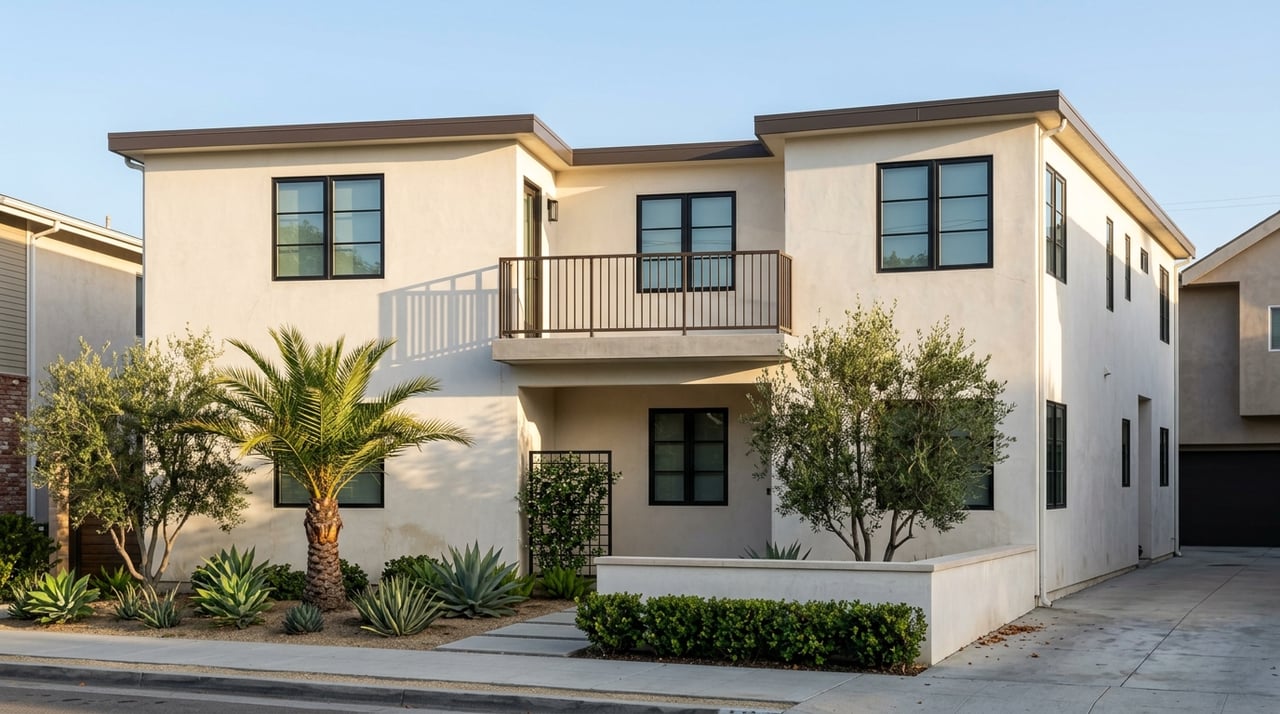
If you underwrite a North Park duplex the same way you would underwrite a generic small multifamily deal, you can get in trouble fast. In this part of San Diego, the spread between in-place income, realistic market rent, and true post-renovation upside can be wide, and sale prices often reflect future potential more than current cash flow. If you want to evaluate a deal like an operator, you need to focus on what is real today, what is achievable next, and what still needs to be proven. Let’s dive in.
Why North Park needs operator underwriting
North Park is one of San Diego’s older urbanized communities, with commercial corridors along University Avenue, 30th Street, and El Cajon Boulevard that transition into surrounding multi-family and single-family areas. For duplex buyers, that means block-by-block and parcel-by-parcel differences matter a lot. Rentability often comes down to unit mix, parking, alley access, interior finishes, and layout more than neighborhood branding alone.
The broader North Park planning area has 45,047 residents and 24,544 households, with 1.83 persons per household and a renter occupancy rate of 73%. That creates a renter-heavy environment where smaller units can perform well if pricing is aligned with the actual product. It also means turnover, re-leasing, and condition-based rent differences should be central to your underwriting.
North Park also offers practical leasing advantages. The area scores highly for walkability, drivability, and restaurant access, which can support tenant demand and quicker lease-up. At the same time, features like parking, in-unit laundry, and thoughtful upgrades can command a meaningful premium because they stand out in an older housing stock.
Start with rent bands, not averages
One of the biggest mistakes in North Park underwriting is relying on one published rent average. Public sources show meaningful differences depending on building type and sample size. Apartments.com lists average rents at $1,792 for a one-bedroom and $2,102 for a two-bedroom, while RentCafe’s large-building dataset shows much higher averages at $2,542 and $3,707.
That gap tells you something important. A duplex should not be priced off broad neighborhood averages alone, especially when those averages may reflect newer product, larger communities, or very different amenities. Instead, you want unit-specific comps that reflect actual condition, layout, and parking.
Current asking rents make that clearer. In North Park, active one-bedroom rentals are asking roughly $2,300 to $3,195 per month, and two-bedroom rentals are asking roughly $2,395 to $4,595 per month. The higher end usually reflects newer finishes, better amenities, or stronger parking setups.
A practical rent framework for duplexes
For a classic older duplex, a reasonable underwriting band is often:
- Basic one-bedroom: about $2,300 to $2,700
- Basic two-bedroom: about $2,600 to $3,200
- Renovated one-bedroom: about $2,800 to $3,200
- Renovated two-bedroom: about $3,200 to $4,000+
These are not universal rent guarantees. They are a useful operator-style starting range based on current listings and the way North Park tenants tend to price quality, parking, and function.
Underwrite three income cases
A disciplined buyer should separate income into three buckets: in-place rent, near-term market rent, and post-renovation or post-ADU rent. This keeps your base case grounded while still giving credit to upside that can be achieved later. It also helps you avoid paying today for improvements or approvals that have not happened yet.
In-place rent
This is the rent the property actually produces today. You should verify it with the rent roll and trailing 12-month operating history, not just a broker summary. If one unit is vacant, underwrite the vacancy honestly rather than smoothing it away.
Near-term market rent
This is the most important underwriting case for many North Park duplexes. You are asking what the existing units can realistically achieve in their current condition, or with limited turnover-ready work. A conservative approach is to use the lowest defensible comp set for the property as it sits today.
Post-renovation or post-ADU rent
This is upside, not your base. If your rent bump depends on new kitchens, in-unit laundry, HVAC improvements, a legal ADU, or a reworked layout, those gains should only be credited after you have a clear scope, budget, and permit path. In North Park, many deals only pencil if the upside is real, so the burden of proof needs to be high.
Stress test the income assumptions
North Park can be a strong rental market, but operator underwriting still needs friction built in. San Diego multifamily vacancy has recently been in the mid-4% range, with Northmarq reporting 4.6% in Q2 2025 and 4.8% in Q4 2025. That is not distress-level vacancy, but it is enough to justify a real vacancy assumption and a modest rent-growth outlook.
Recent rent data also supports restraint. Northmarq reported asking rents around $2,591 per month in Q2 2025 and forecast about $2,615 by year-end, while CBRE reported average rent per unit down 1.4% year over year in Q3 2025. The takeaway is simple: underwrite steady leasing, not aggressive rent appreciation.
Questions to use in your stress test
Ask yourself:
- Does the deal still work with modest rent growth?
- Can it absorb normal turnover between tenants?
- What happens if one unit takes longer to lease than expected?
- Are your renovation premiums supported by current listings, not just hope?
If the numbers only work under a best-case leasing scenario, you are probably paying for upside too early.
Reset expenses to market reality
A seller’s historical expenses rarely tell the full story, especially on a duplex. Self-management, deferred maintenance, below-market insurance, and old tax assessments can make a property look cleaner than it will be after closing. An operator underwrites to the cost structure you are likely to inherit, not the one the seller happened to carry.
Property taxes need a reset
In San Diego County, Proposition 13 caps the base ad valorem tax at 1% of full cash value, but actual tax bills can also include voter-approved debt and special assessments. After a sale, new owners may also receive supplemental tax bills because of reassessment. That means you should underwrite taxes based on the new purchase price and likely post-close reality, not the seller’s old tax basis.
Use a realistic expense ratio
A practical screen for stabilized small multifamily is roughly 35% to 45% of effective gross income, with older and more utility-heavy properties often trending higher. For a duplex, your expense line should usually include:
- Property taxes
- Insurance
- Repairs and maintenance
- Turnover costs
- Utilities paid by ownership
- Management
- Landscaping or exterior upkeep
Even if you plan to self-manage, it is smart to include a management cost in your underwriting. That gives you a truer view of the asset’s performance and keeps your analysis closer to market reality.
Sale prices show why basis matters
Recent North Park trades show how easy it is to overpay for a duplex if you ignore the gap between current income and future potential. A two-unit duplex at 3545 Boundary Street sold for $1.17 million, another two-unit property at 3354-56 30th Street sold for $1.325 million, and a three-unit property at 3974 Kansas Street sold for $1.2 million after being listed higher.
Those price points suggest many North Park duplexes are trading on future upside rather than immediate yield. In plain terms, you often need one of three things for a deal to clear an operator’s hurdle:
- Below-market in-place rents
- A real path to add legal units or improve countable income
- A lower basis than the most aggressive bidders are paying
If you do not have one of those, the deal may still be attractive for a long-term hold, but it may not perform like an operator-grade acquisition on day one.
Treat renovation upside carefully
Renovation can absolutely improve economics in North Park, but not every dollar of work creates the same rent response. The submarket tends to reward practical improvements more than flashy finishes alone. Function matters.
Light cosmetic updates
Light repositioning usually includes paint, flooring, fixtures, appliances, landscaping, and cleanup of shared areas. This kind of work can often move an older unit from the low end of the rent band toward the middle. It usually does not justify top-of-market pricing by itself.
Medium value-add improvements
This is often the most defensible path. Kitchen and bath refreshes, in-unit laundry, mini-splits or HVAC upgrades, added storage, better fencing, and parking improvements can meaningfully improve rentability. In a walkable, renter-heavy submarket like North Park, these improvements can create practical value without requiring a full rebuild.
Heavy repositioning
Heavy upgrades only make sense when your basis and zoning support them. That can include a systems overhaul, layout reconfiguration, or expansion through legal added units. In North Park, this kind of strategy needs very careful underwriting because sale prices already bake in a lot of expected upside.
Verify zoning and ADU potential by parcel
North Park is not one zoning bucket. The City of San Diego makes clear that every property has its own zoning designation, and that the official zoning map should be checked by address through ZAPP. Residential base zones can include RE, RS, RX, RT, and RM, and overlay conditions can shift from block to block.
That is why an operator never underwrites ADU potential based on neighborhood reputation alone. You need to confirm what is legally possible on that specific parcel before assigning value to added density.
What the City allows can vary
The City states that ADUs are generally allowed in zones that permit residential uses. On lots with existing or proposed multifamily units, owners may add up to two detached ADUs, convert habitable space to ADUs up to 25% of the total existing unit count, and convert non-habitable space to ADUs without limit. In single-family zones, one ADU and one JADU are generally allowed.
For a duplex buyer, that means setbacks, utilities, site area, and the building’s existing configuration may matter just as much as the zoning label. ADU upside can be real, but it should stay in the upside case until the permit path is clear.
Do not assume short-term rental income
If a deal only works because you are projecting furnished short-stay income, stop and verify the legal path. In San Diego, short-term residential occupancy rentals of less than one month require both a Transient Occupancy Tax certificate and an STRO license. The City also states that ADUs may not be used as short-term residential occupancy rentals.
That means short-term rental income is not a default underwriting assumption. It is a separate regulatory question that needs to be fully confirmed before it has any place in your pro forma.
Account for California rent rules
California’s Tenant Protection Act, AB 1482, matters for many older North Park duplexes. According to the California Attorney General, the law caps annual rent increases at 5% plus CPI, or 10%, whichever is lower, and provides statewide just-cause eviction protections after 12 months. Some properties are exempt, including certain newer properties and an owner-occupied duplex where the owner occupied one unit at the start of the tenancy and continues to live there.
Because North Park is one of San Diego’s older urban communities, many duplexes may fall under the state baseline unless a documented exemption applies. From an underwriting perspective, that means future rent growth and tenant turnover assumptions should be grounded in actual rules, not just optimistic projections.
A simple operator checklist
Before you move forward on a North Park duplex, run a clean diligence process. The most useful checklist is straightforward:
- Verify zoning and overlays by address
- Confirm legal unit count
- Review the current rent roll
- Analyze the trailing 12-month operating history
- Reset property taxes to the purchase price
- Reset insurance to current market levels
- Test realistic vacancy and turnover assumptions
- Evaluate ADU feasibility by parcel, not by neighborhood label
- Separate base-case rent from renovation or short-term upside
This is what operator-style underwriting looks like in practice. It is less about building the most exciting story and more about removing guesswork from the decision.
A North Park duplex can still be a strong long-term hold, but the path to performance usually comes from disciplined buying, realistic renovation planning, and clean operational execution. If you want a team that thinks beyond the acquisition and helps you evaluate how a property can be bought, improved, and managed over time, connect with Folio Real Estate.
FAQs
What makes North Park duplex underwriting different from other San Diego neighborhoods?
- North Park underwriting is highly parcel-specific because rent, parking, alley access, unit legality, and condition often matter more than neighborhood branding alone.
What rent should you use when underwriting a North Park duplex?
- You should use unit-specific comps based on the property’s actual condition and layout, not a single published neighborhood average.
How should you underwrite property taxes on a North Park duplex purchase?
- You should reset taxes to the purchase price and account for possible supplemental tax bills rather than relying on the seller’s historical tax bill.
Can you count ADU income when buying a duplex in North Park?
- You can analyze ADU income as upside, but it should not be part of your base underwriting until zoning, site constraints, utilities, and the permit path are verified.
Should short-term rental income be part of a North Park duplex pro forma?
- Only if the property can legally operate that use, since San Diego requires an STRO license and TOT certificate for rentals under one month, and ADUs may not be used as STROs.
Does AB 1482 affect older duplexes in North Park?
- Yes, many older North Park duplexes may be subject to California’s statewide rent cap and just-cause rules unless a documented exemption applies.