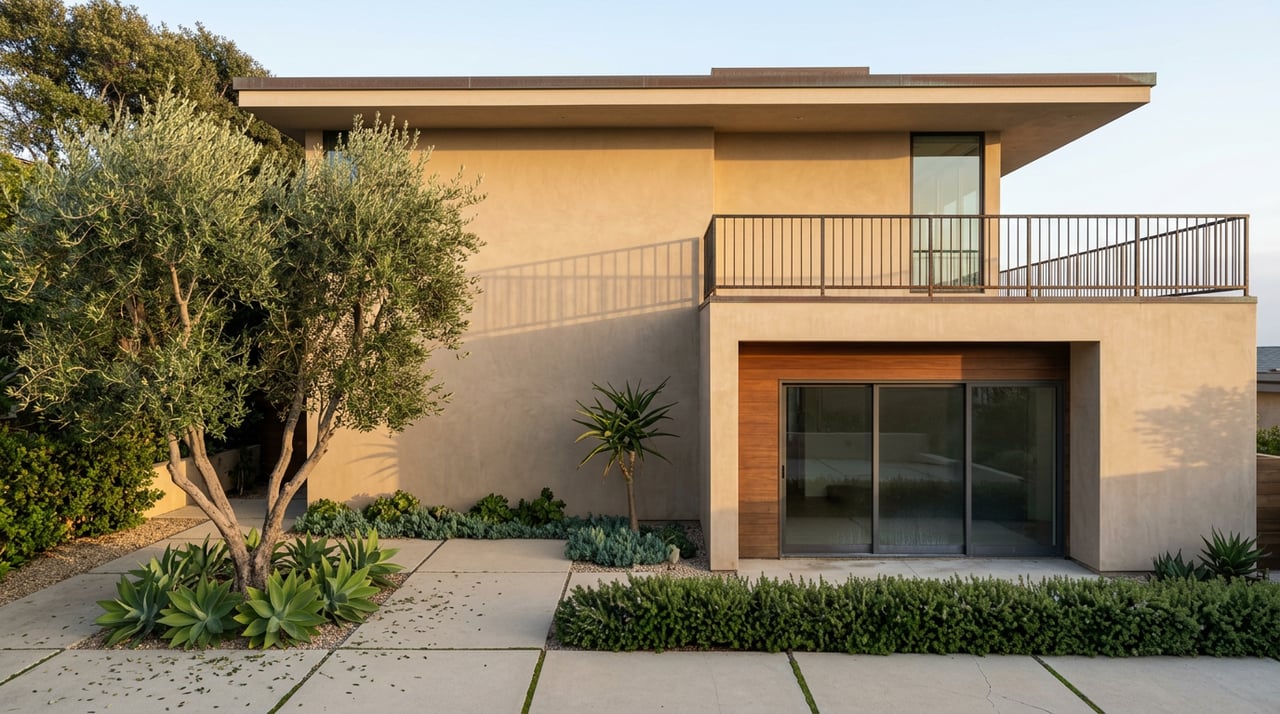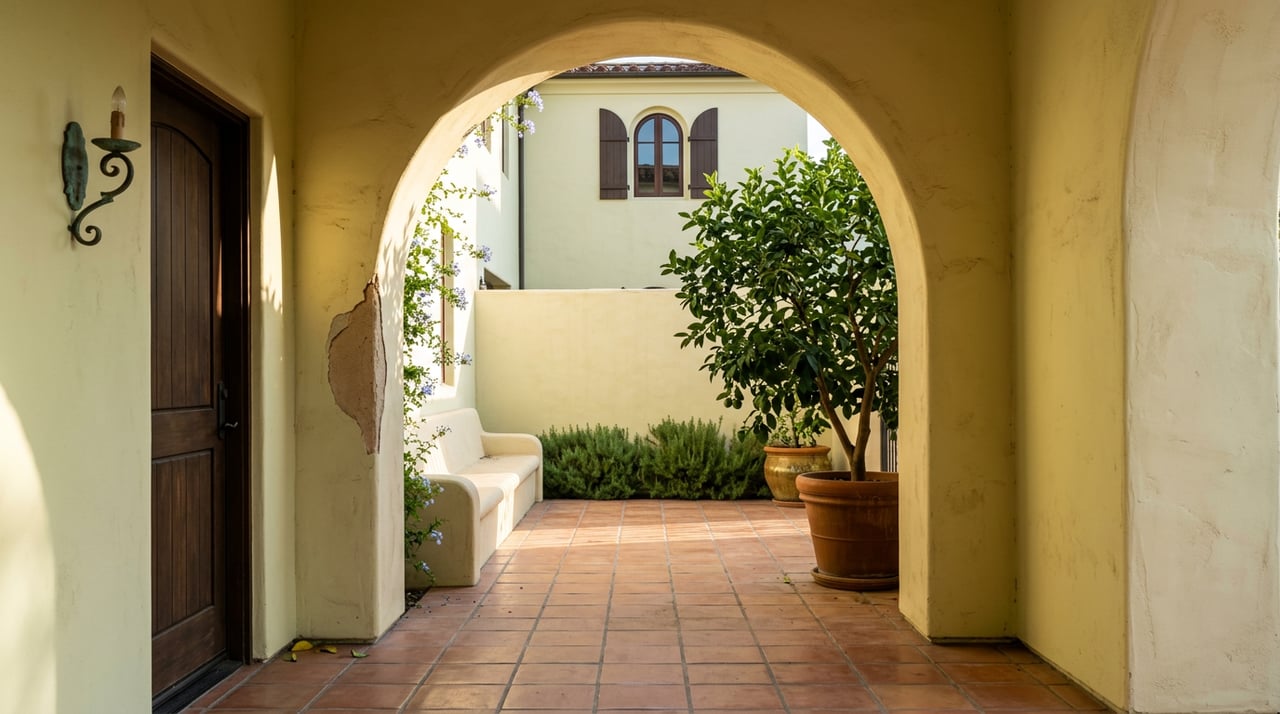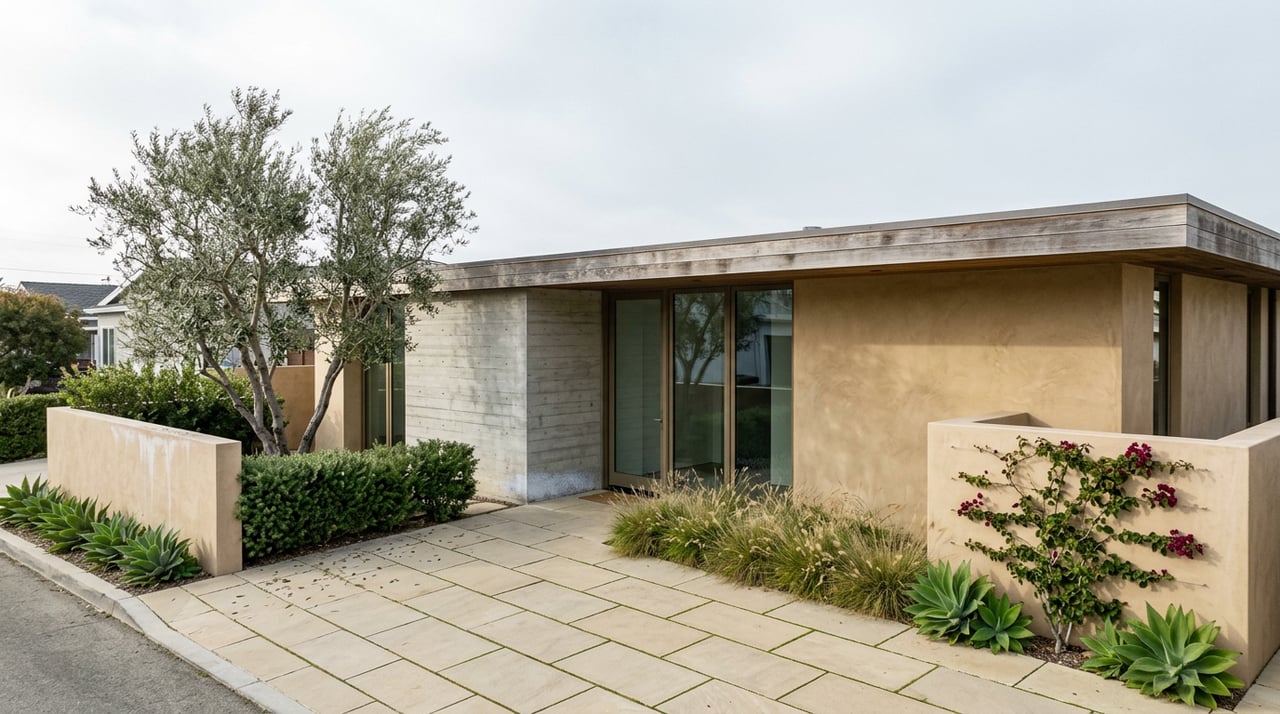
The moment usually comes during the architect's first site visit, not before. A buyer has closed on a bluff-top lot in Olde Del Mar, sketched out a second story with an unobstructed ocean view, and assumed the only real constraint was budget. Then the architect pulls the parcel's overlay designation and delivers the number: 14 feet. Not 26. Fourteen.
That gap between what a buyer expects and what Del Mar's code actually allows is not a rare surprise. It is baked into how the city zones its most desirable land, and it runs in the opposite direction from what most buyers assume. In Del Mar, the parcels commanding the steepest premiums are frequently the parcels with the least room to build.
The Height Limit Almost Everyone Gets Wrong
Del Mar's zoning code sets a citywide building height limit of 26 feet across its primary residential zones. That number holds whether a lot sits in the Very Low Density R1-40 zone, the Modified Low Density R1-14 zone, the R1-10 zone, or the High Density Mixed R2 zone closer to the Village. Floor area ratio and lot coverage vary more by zone than height does.
| Zone | Height Limit | Floor Area Ratio | Max Lot Coverage |
|---|---|---|---|
| R1-40 (Very Low Density) | 26 ft | 12.5% or 2,000 sq ft, whichever is greater | 20% or 3,000 sq ft, whichever is greater |
| R1-14 (Modified Low Density) | 26 ft | 25% or 2,000 sq ft, whichever is greater | 35% or 3,000 sq ft, whichever is greater |
| R1-10 (Low Density) | 26 ft | 25% or 2,000 sq ft, whichever is greater | 40% or 3,000 sq ft, whichever is greater |
| R2 (High Density Mixed) | 26 ft | 35% | 50% |
Those figures come straight from the Del Mar Municipal Code, and on their own they read like ordinary suburban zoning. A buyer comparing lots in R1-40 versus R2 sees a lower FAR on the quieter, larger-lot side of town and a higher one closer to the Village. That tracks with intuition. Land close to downtown allows more building. Land on the quiet edges allows less.
The part that breaks intuition is the overlay.
Where the 26-Foot Number Actually Falls to 14
Del Mar layers a Bluff, Slope, and Canyon Overlay Zone on top of its base zoning, and inside that overlay, the height limit is not 26 feet. It is 14, unless the applicant can demonstrate that a greater height meets the overlay's own siting and stability standards. The code language is direct about the ceiling on any exception:
Building height limit for properties located within the Bluff, Slope, and Canyon Overlay Zone shall be 14 feet unless the applicant can demonstrate that a greater height is consistent with the standards set forth in that overlay zone. However, in no case shall the allowed height exceed the maximum height specified in this Chapter.
That overlay does not sit randomly across the city. It follows the geography that makes Del Mar's land valuable in the first place: the bluffs above the Beach Colony, the slopes running through Olde Del Mar, the canyon edges that give certain lots their view corridor. The same topography that produces a panoramic ocean view is the topography the overlay was written to protect.
Del Mar's own market is split roughly into three tiers by geography. The Beach Colony is the walkable, sand-level enclave of beach cottages and modern rebuilds directly on the Pacific, and it commands the city's highest prices. Olde Del Mar sits just above the Colony on the bluffs, mixing ocean-view estates with quieter interior streets within walking distance of the Village. Del Mar Heights, set back from the coast, offers larger lots and newer construction at comparatively better value, still a short drive from the beach. The first two tiers, the ones buyers pay the most to be in, are also the tiers most likely to intersect the overlay.
The View Premium Is Paying for the Same Square Footage the Overlay Restricts
Local pricing analysis in 2026 places the value of an unobstructed panoramic ocean view, compared to an otherwise similar property with no view, at anywhere from $500,000 to $2 million or more. That premium is the single largest per-property value variable in the Del Mar coastal market, larger than square footage, larger than lot size, larger than almost anything else a buyer can point to on a comparable sales sheet.
Here is the contradiction worth sitting with. A buyer pays that premium specifically for elevation, exposure, and sightline, the exact physical conditions that put a lot inside the Bluff, Slope, and Canyon Overlay Zone. The same geography that generates the view premium generates the height restriction that limits how much of that view a second story can actually capture. A flat, inland Del Mar Heights lot with no overlay designation can build to the full 26 feet permitted in its zone. A bluff lot in Olde Del Mar, the one commanding the higher price per square foot, may be capped at roughly half that, unless a geotechnical and design case convinces the city otherwise.
This is not a reason to avoid view lots. It is a reason to underwrite them differently than a buyer would underwrite an inland parcel, and to have that overlay question answered before the offer goes in, not after.
The Permit Timeline Nobody Budgets For
Height is not the only friction point. Nearly the entire city of Del Mar sits within California's Coastal Zone, which means many exterior and structural renovations require a Coastal Development Permit in addition to the standard city building permit. The city's own Development Applications & Guides page lists the CDP alongside floodplain and land conservation permits as a routine, not exceptional, requirement for coastal-zone projects.
Coastal review adds months to a project timeline that a buyer coming from an inland market might not expect. A remodel that would take a few weeks to permit in a non-coastal jurisdiction can sit in review considerably longer here, and that timeline matters most for buyers planning to close, renovate, and occupy or lease within a specific window.
The ADU Math Works Differently in Del Mar
One more detail catches buyers who are counting on an accessory dwelling unit to offset the cost of a Del Mar purchase. In many California cities, ADU square footage sits outside the main house's floor area ratio calculation. In Del Mar, ADU habitable area counts toward the lot's FAR. A detached ADU is capped at 16 feet, dropping to 14 feet in the Bluff, Slope, and Canyon Overlay, the same overlay height that governs the primary residence. The rental-income or multigenerational-living pitch that works cleanly elsewhere requires a tighter FAR calculation in Del Mar, one that has to account for both structures on the same lot.
The One Site Where None of This May Apply
There is a live case in Del Mar right now that shows even this level of local control has a ceiling of its own. A developer, Carol Lazier, submitted a preliminary application in October 2022 for a 259-unit apartment complex, including 85 affordable units, on a 6.9-acre bluff site at 929 Border Avenue overlooking Del Mar Dog Beach. That submission came several months before Del Mar received state certification of its housing element. Lazier's position is that the timing qualifies the project for California's builder's remedy, a state provision that lets a housing project bypass local zoning entirely when a city's housing element is not yet certified.
Del Mar has repeatedly deemed the application incomplete, citing missing rezoning applications and coastal permits. The dispute escalated enough that, as of January 6, 2026, the city formally requested an in-person meeting with the California Attorney General's office to resolve the standoff. The same parcel has also been floated as a backup affordable housing site tied to separate negotiations with the Del Mar Fairgrounds, negotiations the two parties had agreed to continue through April 2026.
This dispute is not evidence that Del Mar's 26-foot limit or its overlay height cap is about to change for a typical single-family remodel. It is evidence that the zoning a buyer is underwriting against is not automatically immune to state housing law, particularly on larger parcels where a housing element certification question is in play. That is a different kind of risk than a height variance, and worth knowing about separately.
What to Check Before You Write an Offer
Before submitting an offer on a Del Mar property with any renovation, addition, or rebuild in the plan, confirm the following:
- Which base zone the parcel sits in, since FAR and lot coverage differ meaningfully between R1-40, R1-14, R1-10, and R2
- Whether the parcel falls inside the Bluff, Slope, and Canyon Overlay Zone, which drops the height limit from 26 feet to 14 unless a geotechnical case justifies more
- Whether the project will require a Coastal Development Permit in addition to standard building permits, and what that adds to your timeline
- Whether any planned ADU square footage will count against the lot's existing FAR, since it does in Del Mar
A Few Questions Worth Asking
Does the 14-foot overlay height limit apply to additions as well as new construction? Yes. The Bluff, Slope, and Canyon Overlay Zone height standard applies to development within its boundary regardless of whether the project is a full rebuild or an addition to an existing structure, though an applicant can request an exception if the design meets the overlay's stability and siting standards.
How do I find out if a specific lot sits inside the overlay? The overlay boundary is tied to bluff, slope, and canyon topography rather than a simple street-by-street map, so the most reliable way to confirm a parcel's status is a zoning verification request through the city's Planning Department before writing an offer contingent on renovation plans.
Does the Seaside Ridge dispute mean Del Mar's zoning could change citywide? Not based on what has happened so far. The dispute centers on a single large parcel and a specific housing element certification timing question. It does not indicate that the base height limits or FAR standards governing typical single-family lots are under revision.
Del Mar rewards buyers who do the zoning homework before falling for the view. A lot's price per square foot and its buildable envelope do not move in the same direction here, and the gap between the two is exactly where a well-prepared offer beats an enthusiastic one.
Folio Real Estate works through this kind of zoning and permitting detail with coastal buyers and investors before an offer goes in, not after escrow closes. Build Your Folio With Us.