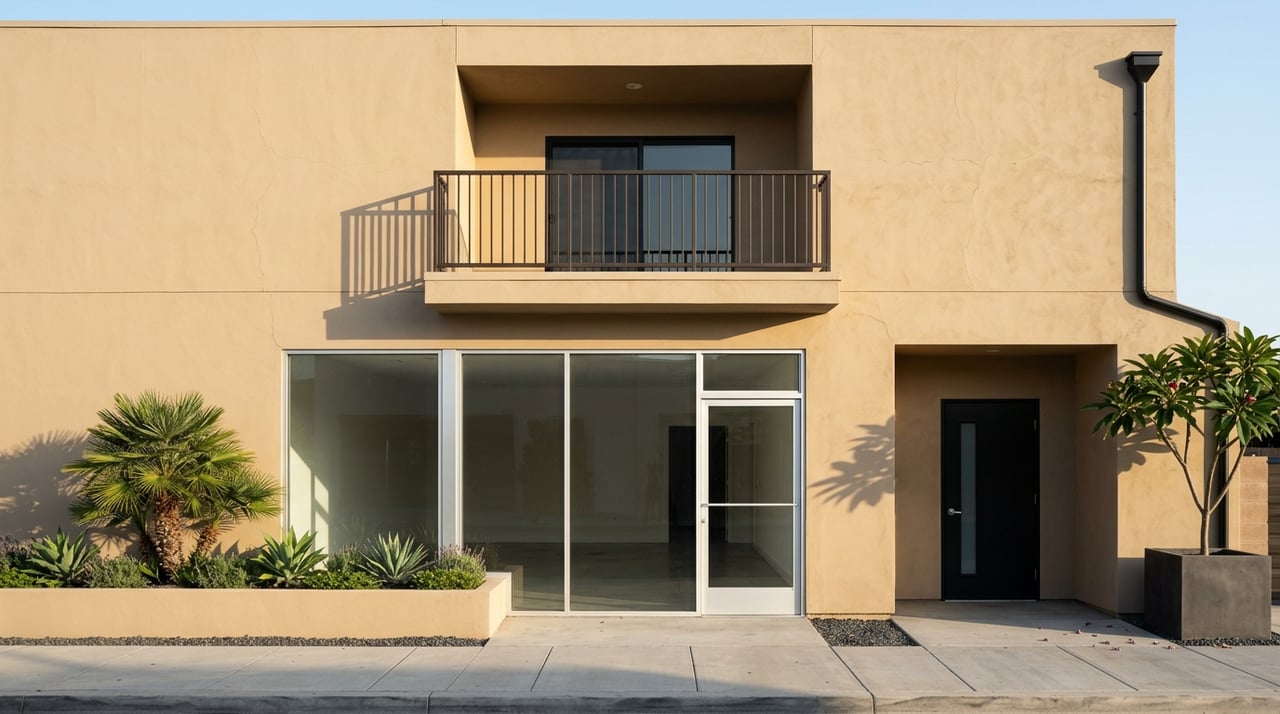
If you are looking for mixed-use or multifamily opportunities in Leucadia, the biggest mistake is assuming the whole corridor works the same way. It does not. This coastal pocket of Encinitas has real appeal for investors, but the best opportunities usually come from careful parcel-level analysis, not broad neighborhood assumptions. In this guide, you will learn where the strongest zoning pockets are, what building types the city is trying to encourage, and which feasibility issues can make or break a deal. Let’s dive in.
Why Leucadia draws investor interest
Leucadia sits within the North 101 Corridor Specific Plan, a roughly 231-acre planning area that spans Leucadia and Old Encinitas. The city’s stated goal is to preserve the corridor’s identity, scale, and character while supporting revitalization along North Highway 101.
That matters because this is not a generic commercial strip. The city’s design guidance points to an eclectic beach-town setting with modest building scale, bold colors, outdoor seating, small plazas and courtyards, and references to Leucadia’s agricultural heritage.
From an investment perspective, Leucadia also benefits from its broader Encinitas location. Census QuickFacts show a 2025 population estimate of 60,736, a median household income of $162,229, a median gross rent of $2,886, and an owner-occupied housing rate of 66.5%.
Those numbers suggest a high-income coastal market with meaningful rental demand. Citywide retail sales of $1.706 billion in 2022, along with $423.1 million in accommodation and food services sales, also support the case for neighborhood-serving and visitor-oriented commercial uses.
North 101 shapes the opportunity
In Leucadia, the opportunity set is heavily influenced by the North 101 Corridor Specific Plan. The corridor includes commercial and commercial-mixed zoning, residential-only zoning, and transportation land, which means the development story changes from block to block.
The code is intentionally tailored for small-lot redevelopment. Compared with broader citywide standards, the corridor allows reduced setbacks, flexible parking approaches, and higher lot coverage in certain commercial contexts.
That can create attractive infill potential, especially on smaller parcels near Highway 101. But it also means you need to verify what is actually permitted on each site before you underwrite value, density, or design potential.
Key zoning pockets to watch
N-CM zones on Highway 101
The N-CM zones are some of the most important places to look if you want mixed-use frontage along North Highway 101. These areas generally allow general commercial uses or mixed use at up to 25 dwelling units per net acre, depending on the subzone.
N-CM-1 applies to several Highway 101 frontage areas and emphasizes pedestrian scale and an eclectic blend of uses. N-CM-2 covers frontage generally between A Street and Marcheta Street and also allows general commercial or mixed use up to 25 dwelling units per net acre.
N-CM-3 covers the Second Street area north of B Street and generally between North Highway 101 and Third Street. The city describes it as a gateway node serving residents and visitors using nearby recreational facilities, and it also allows stand-alone commercial or mixed use up to 25 dwelling units per net acre.
N-CRM zones for flexibility
The N-CRM zones can be especially interesting if you are evaluating properties that may work as stand-alone residential, commercial, or mixed-use projects. That flexibility can widen your options when a site does not pencil as a classic retail-over-residential deal.
N-CRM-1 applies along North Highway 101 from the Handy Rentals property to West Glaucus Street. It allows stand-alone commercial, mixed use, or stand-alone residential, with mixed use allowed up to 25 dwelling units per net acre.
N-CRM-2 extends the neighborhood-serving node at Leucadia Boulevard and Vulcan Avenue and applies to nearby Vulcan frontage. It also permits stand-alone commercial, mixed use, or stand-alone residential, but at a lower maximum of 15 dwelling units per net acre.
Visitor-serving zones with a hybrid angle
Leucadia also includes visitor-serving zones that can matter for investors looking at specialized mixed-use formats. N-VSC is intended for commercial activities that serve visitors for recreation and business.
N-L-VSC is primarily for hotel or motel uses with ancillary visitor-serving uses. The R-30 overlay version is especially notable because it is intended to create additional residential opportunities through a required mix of residential and visitor-serving commercial uses, along with a minimum of 30 traditional overnight accommodations at 25 to 30 dwelling units per acre.
Best-fit building types in Leucadia
Mixed-use over commercial
The city’s design guidance points clearly toward pedestrian-oriented mixed-use residential buildings with ground-floor commercial and residential above. These projects typically include shared entrances and parking in a surface lot, underground, or tuck-under configuration.
For investors, that makes Leucadia a better fit for modest coastal village product than large-format auto-oriented redevelopment. If you are screening a site, ask whether the building can contribute to an active street presence while still meeting circulation and parking requirements.
Apartments and walk-up flats
The city also identifies apartment prototypes with common entrances, corridors, balconies, and shared courtyards. These can be single-loaded or double-loaded and may use surface or podium parking.
For smaller infill opportunities, walk-up multifamily flats are especially relevant. The city describes these as typically 4 to 6 units with individual or stair-core access and tuck-under parking, which can make them a practical model for compact coastal parcels.
Lower-scale edge transitions
Not every parcel should be pushed to the most intense mixed-use format. Near single-family areas, the city explicitly favors lower-scale forms such as townhomes, rowhomes, duplexes, and carriage homes.
It also points to low-intensity neighborhood-serving uses, including coffee shops, live-work space, and other lower-impact commercial concepts. In these edge conditions, fit and transition matter just as much as unit count.
What can make or break a deal
Ground-floor frontage rules
If you are underwriting a mixed-use property on Highway 101, the frontage rules are critical. Residential uses must be above or behind the primary commercial use and cannot occupy the ground-floor frontage along Highway 101.
The code also requires separate residential and commercial entrances. In addition, residential floor area cannot exceed 50 percent of the gross building area unless a Major Use Permit is obtained.
Tight building envelope
The standard building envelope in these mixed-use settings is compact but efficient. The code lists a minimum lot area of 3,950 square feet, a minimum width of 40 feet, a minimum depth of 90 feet, 0-foot front and side setbacks, a 10-foot rear setback, up to 90 percent lot coverage, and a height limit of 33 feet or 3 stories, whichever is less.
That can support workable infill design, but it leaves little room for sloppy site planning. Frontage width, rear access, and parking layout all deserve close review early in your analysis.
Parking feasibility
Parking is one of the biggest variables in Leucadia deal screening. The city acknowledges that many North 101 sites are too small for standard off-street parking ratios, so it allows special strategies in this corridor.
Adjacent on-street parking can count in some cases, and existing buildings may receive a parking break for additions or changes of use. Mixed-use units are capped at two spaces per dwelling, or one space for affordable units, but all residential parking in mixed-use projects must still be off-street and on-site.
Buffering next to residential zoning
If a commercial or mixed-use site abuts residential zoning, edge treatment is not optional. The code requires a masonry wall of at least 6 feet, and that can increase to 8 feet to address noise or visual impacts.
The wall must also step down near the front property line. For investors, this means buffering costs and site design constraints should be part of underwriting, not an afterthought.
Outdoor dining and tenant value
For retail, café, or food-oriented tenancy, outdoor seating can add value in a walkable coastal corridor. But it is regulated.
Outdoor dining in the public right-of-way requires an encroachment permit, must maintain at least 4 feet of clearance, cannot use sound amplification, and may be revoked by the city after notice. If your business plan depends on sidewalk dining, confirm the operational path early.
Entitlements are still evolving
Leucadia is investable, but it is not static. Encinitas adopted objective design standards for multifamily housing in 2022, and the city is updating the Downtown Encinitas and North 101 Corridor Specific Plans to add objective design standards under AB 2011 and SB 6.
The city’s 2026 process included a Planning Commission hearing on April 16, 2026, and a City Council hearing that was continued to August 12, 2026. Depending on the parcel, projects in the coastal appeal jurisdiction can also involve Coastal Commission review.
That is why the best practice in Leucadia is disciplined site-by-site diligence. Before you get attached to a concept, verify zoning, overlays, frontage conditions, parking feasibility, and current entitlement status.
A practical Leucadia screening lens
If you are narrowing down opportunities, focus first on small commercial or mixed-use parcels already located within the corridor’s mixed-use pockets. These are often the sites with the clearest path to redevelopment without relying on a major zoning shift.
Next, test whether the site can realistically solve parking, circulation, and buffering requirements. A parcel can look attractive on paper and still struggle once you apply frontage rules, wall requirements, or parking constraints.
Finally, compare your concept with the city’s stated design intent. In Leucadia, the strongest projects are usually modest, pedestrian-scale, and context-sensitive rather than oversized or auto-oriented.
For long-term investors, that local fit can matter just as much as initial pricing. The corridor is also benefiting from Leucadia Streetscape improvements, including landscape and tree-canopy restoration, sidewalks, bike lanes, crosswalks, parking capacity, and drainage work along roughly 2.5 miles of North Coast Highway 101.
If you want help evaluating mixed-use or multifamily opportunities in Leucadia through an operator’s lens, Folio Real Estate can help you assess acquisition strategy, site fit, and long-term asset potential.
FAQs
What makes Leucadia different for mixed-use investing?
- Leucadia is shaped by the North 101 Corridor Specific Plan, which promotes a modest, pedestrian-oriented beach-town character and creates parcel-specific rules that can vary widely across the corridor.
Which Leucadia zones allow mixed-use development?
- Key mixed-use opportunities are commonly found in N-CM-1, N-CM-2, N-CM-3, N-CRM-1, and N-CRM-2 zones, with most allowing mixed use up to 25 dwelling units per net acre, except N-CRM-2 at 15 dwelling units per net acre.
Can residential units go on the ground floor along Highway 101 in Leucadia?
- No. In mixed-use street-front properties along Highway 101, residential uses must be above or behind the primary commercial use and cannot occupy the ground-floor frontage.
What building types fit best in Leucadia?
- The city’s guidance points to mixed-use buildings with ground-floor commercial, apartment prototypes with shared entries and courtyards, walk-up flats, and lower-scale transition forms like townhomes, duplexes, and rowhomes near residential edges.
Why is parking such a big issue for Leucadia properties?
- Many North 101 parcels are small, so parking feasibility can heavily influence design and value even with corridor-specific flexibility such as counting some adjacent on-street spaces and capping mixed-use residential parking at two spaces per unit.
How should you screen a Leucadia mixed-use or multifamily deal?
- Start with parcel-by-parcel verification of zoning, overlays, frontage width, parking feasibility, buffering requirements, and current entitlement status before assuming the site supports your intended project type.